

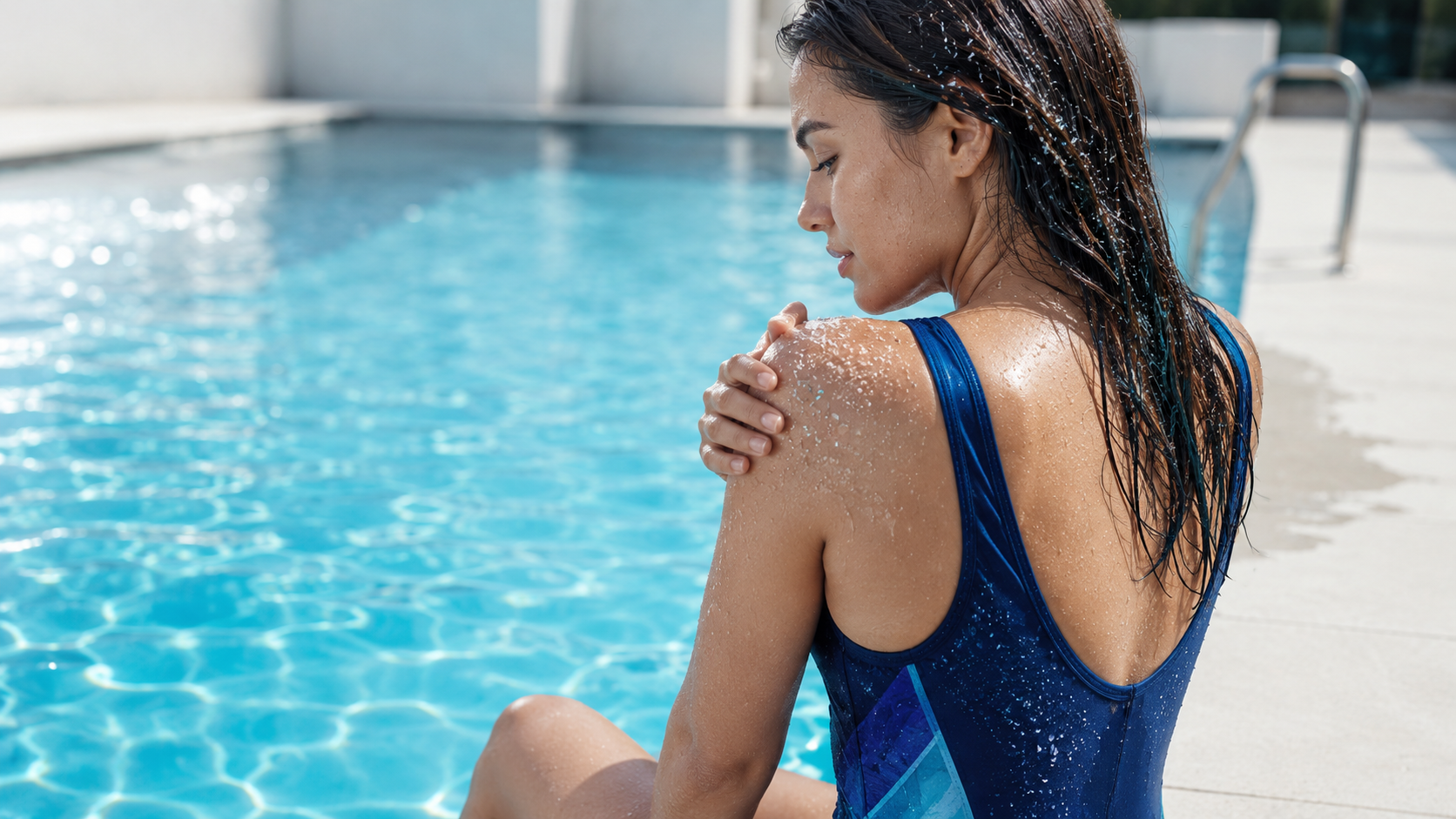
Swimming is one of the best activities for fitness, recreation and family bonding. Chlorine plays an important role by helping control harmful germs in pool water. But the same reactive chemistry that makes chlorine an effective disinfectant can also affect the surfaces it touches—including your skin, hair and swimwear.
Does chlorine really “bond” to you?
“Bonding” is a convenient way to describe what swimmers experience, but the chemistry is more complex. In pool water, chlorine produces active forms such as hypochlorous acid and hypochlorite. These oxidizing substances react with organic material, including sweat, body oils, dead skin cells and personal-care products.
Some reactions form chloramines, also called combined chlorine. These compounds are responsible for much of the familiar “pool smell” and can irritate the skin, eyes and respiratory tract, especially when they accumulate around poorly ventilated indoor pools. The US Centers for Disease Control and Prevention explains that chloramines form when chlorine combines with body waste introduced into the water.
The result is not one identical bond across the body and swimwear. Depending on what chlorine encounters, it may leave residue, alter proteins, react with oils or oxidize fabric fibers and dyes.
What chlorine can do to the skin
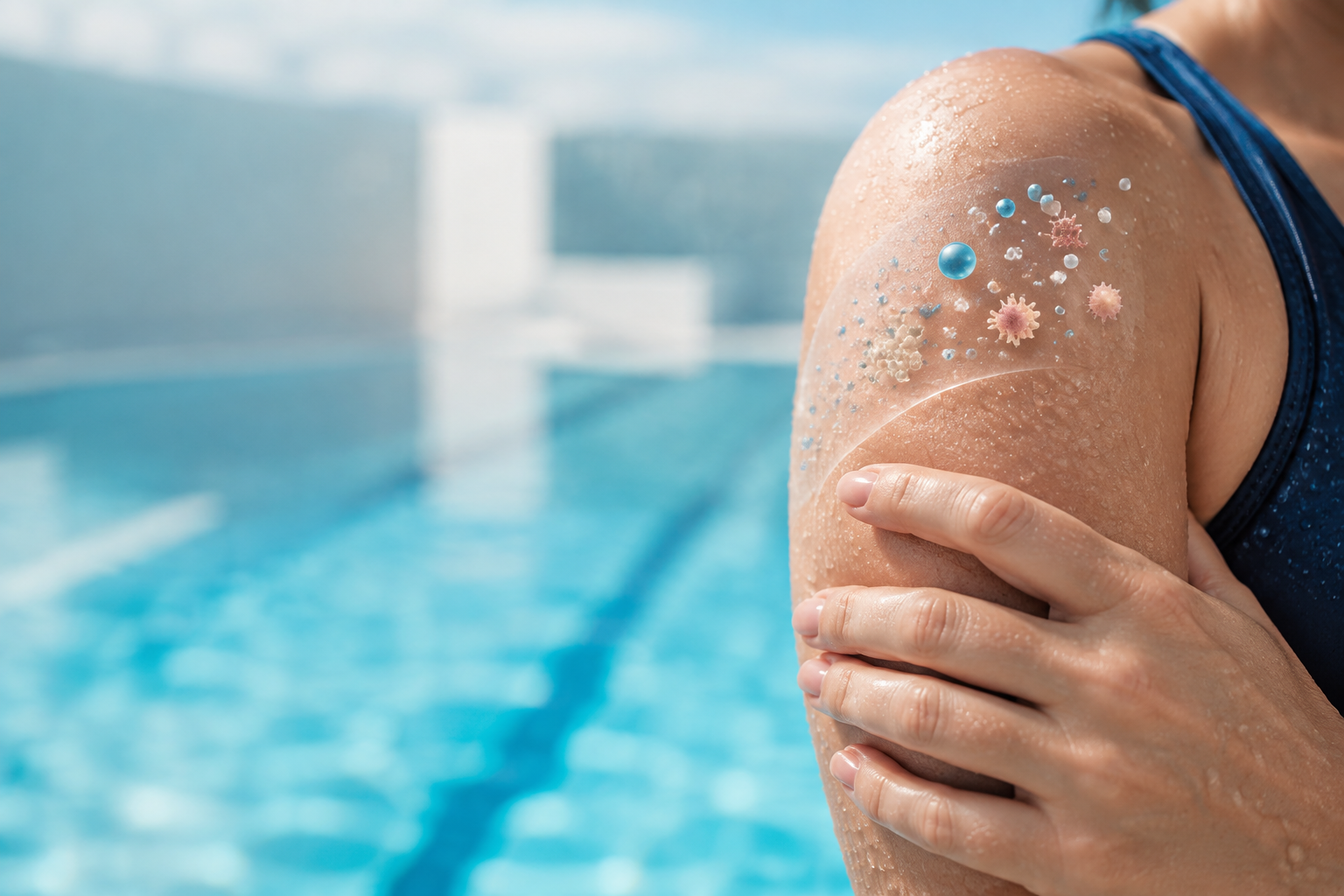
The outermost layer of the skin is a protective barrier made of skin cells, proteins and lipids. Extended exposure to pool water and its disinfectant by-products can disturb this barrier, allowing more moisture to escape.
In a 2021 study of 58 young elite athletes, swimmers showed a significant increase in transepidermal water loss at several body sites after a two-hour training session. Increased water loss is a sign that the skin barrier has temporarily changed.
Swimmers may notice:
Dry, tight or rough-feeling skin
Itching or redness
Irritation in sensitive areas
Discomfort or worsening of an existing sensitive-skin condition
Not everyone reacts in the same way. The effect can depend on pool chemistry, length and frequency of exposure, skin condition and how quickly the swimmer showers afterward. Persistent rashes or severe irritation should be assessed by a healthcare professional.
What chlorine can do to the hair
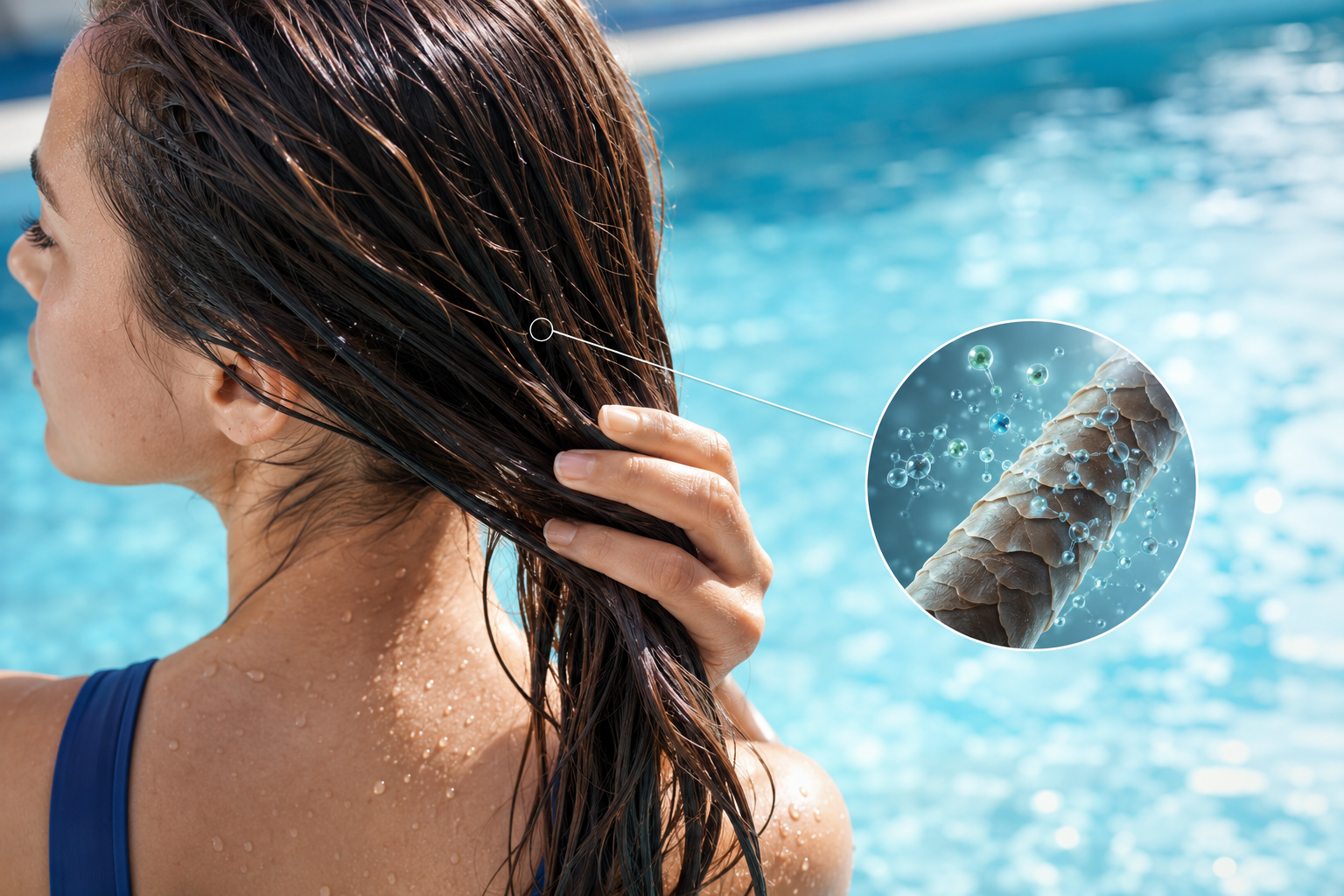
Hair is made largely of keratin, a protein containing amino acids that can react with oxidizing chemicals. Laboratory research has demonstrated that chlorinating agents can produce stable chlorinated amino-acid markers in human hair. In one 2022 analytical chemistry study, researchers detected chlorinated forms of tyrosine after hair samples were exposed to chlorinating agents. This shows that chlorine-related chemistry can involve the hair protein itself—not only sit on the surface.
With repeated pool exposure, swimmers may experience:
Dryness and loss of softness
A rougher texture and more tangling
Increased brittleness or breakage
Faster fading of color-treated hair
A lingering pool odor even after an ordinary wash
Light or chemically treated hair may also develop a greenish tint. This is usually linked to oxidized metals such as copper depositing on porous hair—not chlorine dyeing the hair green by itself.
What chlorine can do to swimwear
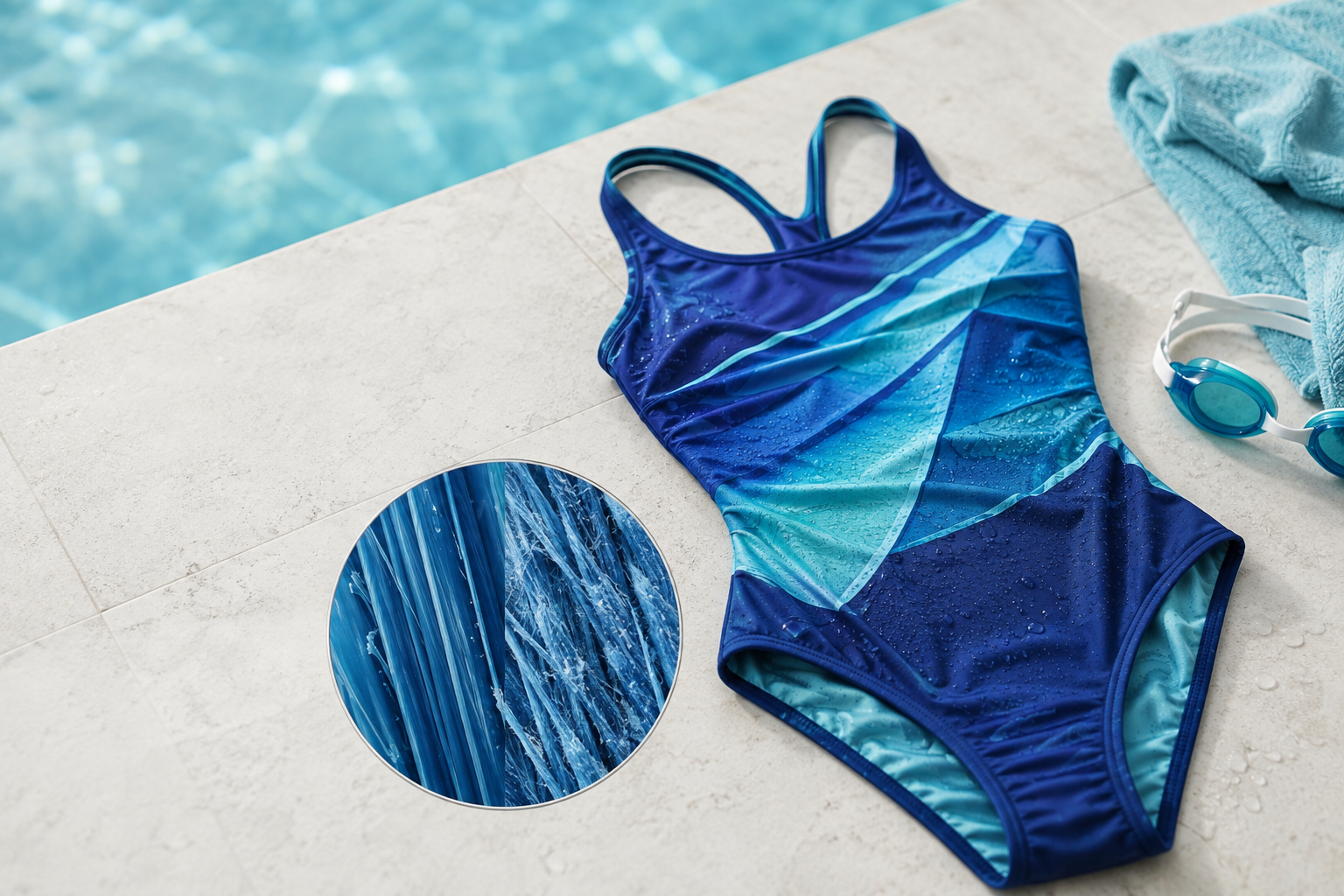
Most swimsuits are made from blends of polyester or nylon with elastane, also called spandex. These materials provide strength, shape and stretch, but repeated chemical exposure can gradually change their structure.
A 2024 study of swimwear materials found fiber and yarn damage after prolonged immersion in chlorinated pool water. Under the study conditions, fabric breaking force declined by as much as 12.4% after 200 hours of exposure and much more after 300 hours. These were extended test conditions rather than a normal single swim, but the results demonstrate how damage can accumulate over time.
Signs of chlorine-related swimwear damage include:
Fading colors and prints
Loss of stretch and shape
Thinning or roughening of the fabric
Weakened fibers and shortened garment life
Lingering chlorine odor after rinsing
Leaving a wet swimsuit inside a bag allows chlorinated water to stay in contact with the fibers longer, extending the exposure even after the swimmer has left the pool.
Why an after-swim routine matters
A quick rinse is better than doing nothing, but dedicated swim care helps address the specific residue and odor associated with pool water. After swimming:
Rinse your body, hair and swimwear with fresh water as soon as possible.
Cleanse the hair and skin with products developed for after-swim care.
Wash swimwear gently instead of leaving it wet in a bag.
Avoid harsh scrubbing, hot water and forceful wringing.
Air-dry swimwear in the shade, away from direct heat.
GoSwim’s anti-chlorine body wash, shampoo and swimwear detergents are created for the needs of swimmers. They help make it easier to remove the lingering smell and residue associated with chlorinated water, so swimmers can feel fresher and care for their gear after every session.
Chlorine is essential to safer pool water, but its after-effects do not have to become part of your swimming routine. Proper swim care can help protect the things that go into the water with you—your skin, your hair and your favorite swimwear—so you can focus on enjoying every swim.